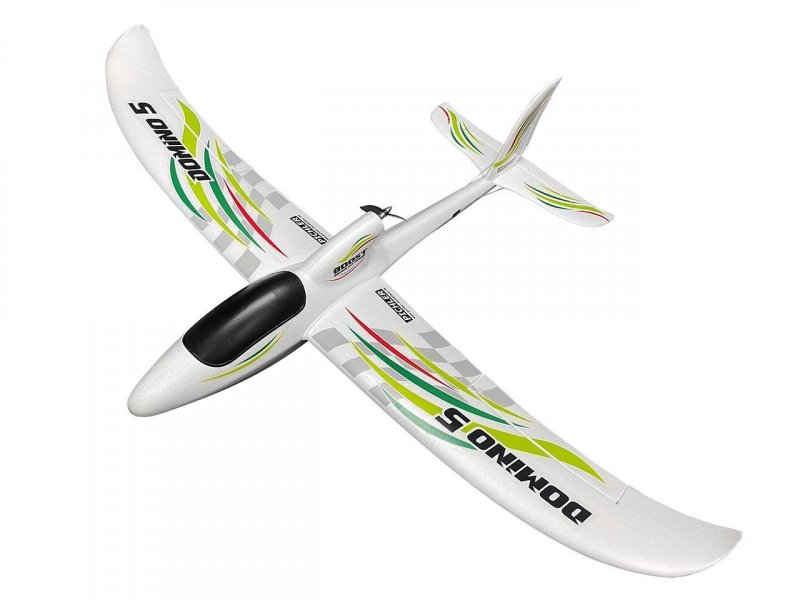
TL;DR
Quick Guide: the more complete it is, the easier the start.
RTF is the most convenient, PNP needs your own RC equipment and usually battery/charger, ARF requires more components from you, and a kit is for model builders who really want to build.
Ideal for beginners and gifts.
Receiver, transmitter, battery and charger are often needed separately.
Good for pilots with experience and components on hand.
Plan tools, glue, time and RC components.
Terms at a glance
The abbreviations describe the delivery state.
The abbreviation alone is not enough; the exact product description matters. Manufacturers can interpret included parts differently.
| Abbreviation | Meaning | Typical for |
|---|---|---|
| RTF | Ready to Fly / Ready to Run | Beginners, quick start, gifts. |
| PNP | Plug and Play | Pilots with their own transmitter, receiver, battery and charger. |
| BNF | Bind and Fly | Users with a compatible transmitter system. |
| ARF | Almost Ready to Fly | Advanced users with their own equipment and assembly experience. |
| Kit | Model must largely be built by the user | Model builders who want to build, adapt and equip. |
RTF & PNP
RTF is the easiest entry, PNP is more flexible.
RTF models usually include model, drive, electronics, transmitter and often battery/charger. PNP models are usually preassembled but leave transmitter, receiver, battery and charger to you.
ARF & kit
More freedom means more responsibility.
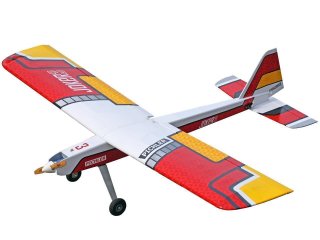
ARF models and kits give you more freedom in motor, servos, ESC, battery and transmitter. In return, you need more experience, matching components and clean assembly.
- ARF: largely prepared, but much less complete than RTF/PNP.
- Kit: building, gluing, equipping and setting up are part of the project.
- Total cost: calculate model price plus electronics, battery, charger, tools and small parts.
Product recommendations
Concrete examples make the delivery state tangible.
The examples show how different the entry point can be depending on the version.
 Domino 5 RTF
 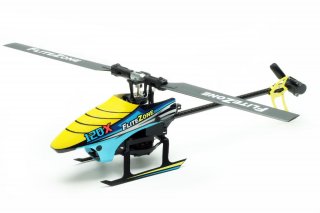 FliteZone 120X PNP
 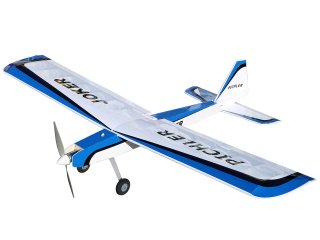 Joker Laser Cut Kit
 Typical buying mistakes
The included parts decide the real entry price.
Transmitter, receiver, battery and charger may be missing.
Transmitter and receiver must truly match.
Assembly, component choice and setup require experience.
Plan glue, tools and build time.
Extra batteries and charger often decide whether you can actually use the model.
Look at total cost including RC gear and accessories.
Frequently asked questions
Short answers
Is RTF always completely ready?
Usually almost, but not always 100%. Transmitter batteries, tools or spare batteries can still be needed.
Which is better: RTF or PNP?
For beginners, usually RTF. PNP is better if you already own transmitter, receiver, batteries and charger.
Is ARF suitable for beginners?
Only to a limited degree. ARF gives more freedom, but requires more experience.
What is different about a kit?
The build is central. You need more time, tools, glue and often your own RC components.
Fact-check note
The terms were sorted for practical use: RTF for the easiest entry, PNP/BNF for existing RC equipment, ARF for more components from you and kits for real building.